Whether you are a hobbyist working in your home garage or a professional fabricator running a large-scale CNC table, your cnc plasma cutter is an invaluable tool. It slices through metal with incredible speed and precision. However, that cutting power generates extreme heat and electrical energy, taking a heavy toll on the front end of your torch.
To keep your machine running perfectly, you need a solid grasp of your plasma cutter consumables. These are the parts of the torch that wear out naturally over time and require regular replacement. Understanding how these components work together, how to maintain them, and when to swap them out is the secret to achieving flawless cuts and minimizing operational costs.
The Core Plasma Cutter Parts Explained
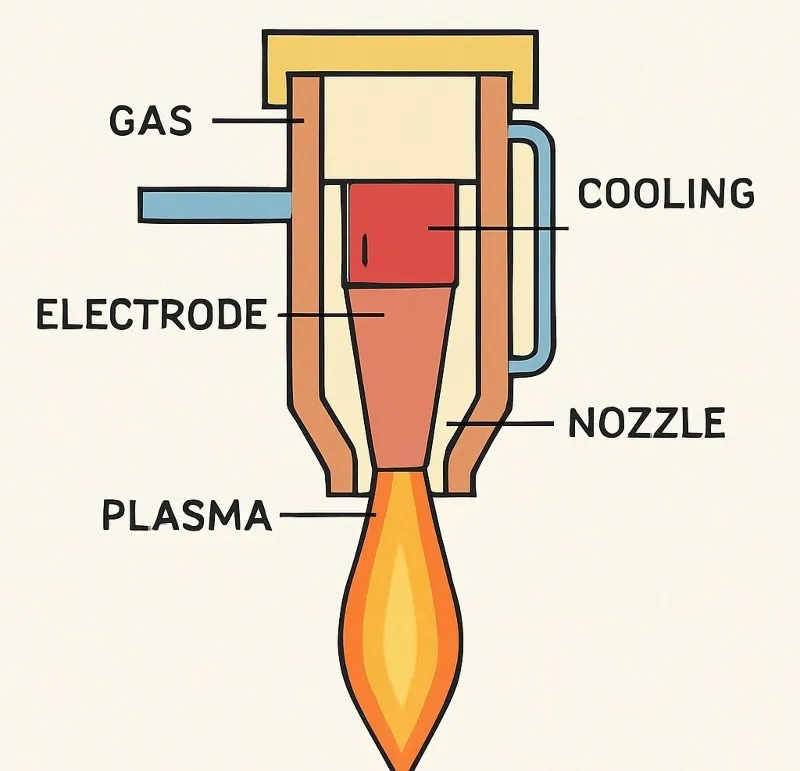
A typical plasma torch is an assembly of several precise plasma cutter parts. Each component plays a vital role in shaping, focusing, and protecting the plasma arc.

This image shows a set of consumables for a plasma cutter; these parts are core components of the plasma cutting torch and determine both cutting quality and the equipment's service life. Below is a breakdown of the function of each type of part:
1. Top 5 large copper components: Plasma nozzles (cutting tips)
The nozzle constricts the plasma gas, focusing the arc into a sharp, powerful beam. The size of the hole in the center of the nozzle directly dictates the width and energy of your arc. Understanding the orifice diameter impact on cut quality is crucial; a smaller orifice is generally used for fine, detailed cuts at lower amperages, while a larger orifice handles thicker materials at higher amperages.
Material: Oxygen-free copper (high thermal and electrical conductivity; the standard material for plasma consumables).
Function: Constrains the plasma arc, focusing the compressed arc into a high-energy beam to cut metal. The nozzle orifice diameter directly determines the cutting current and precision; different specifications are suited to different plate thicknesses.
2. Second row, six small copper components: Electrodes
The electrode carries the electrical current from the torch to the plate. Inside the center of a standard air or oxygen plasma electrode is a small insert made of hafnium. Hafnium is used because it can withstand the extreme temperatures of the electric arc. Over time, this insert melts and burns away, leaving a small pit.
Material: Copper (the tip typically contains an embedded hafnium insert, though details are not visible in the image).
Function: It generates the arc within the cutting torch, serving as the "source" of the plasma arc. The hafnium insert at the tip ionizes under high temperatures; as one of the fastest-wearing consumable parts, it requires periodic replacement.
3. Third row of The Swirl Ring and The Retaining Cap: securing and protective parts
Left: copper sleeve; center: two silver metal rings; right: stainless steel sleeve. These parts typically function as swirl rings (or gas distributors) and protective caps (or retaining caps).
Function of the swirl ring: It generates a stable, swirling flow of cutting gas, optimizes the shape of the plasma arc, and ensures cutting stability.
Function of the protective/retaining cap: It protects the nozzle and electrode from damage caused by spatter while serving to secure and cool the components; some models also feature integrated gas channels.
The swirl ring controls the flow of the gas as it moves down the torch, spinning it into a vortex. This vortex creates a cool layer of gas around the outer edges of the nozzle hole, protecting the copper nozzle from melting while simultaneously constricting the arc.
The retaining cap holds all the plasma consumables tightly together on the torch body. It must be secured firmly to ensure proper electrical contact and gas flow.
4. Two pink ceramic components at the bottom: ceramic protective cap / gas shroud
Material: Alumina ceramic (high-temperature resistant, excellent insulation)
Function: Provides high-temperature resistance and electrical insulation; protects the nozzle tip from heat damage caused by cutting spatter; facilitates uniform gas distribution; minimizes interference during the cutting process; and improves the quality of the cut kerf.
These outer parts protect the rest of the consumables from sparks, molten metal blowback, and radiant heat. When setting up your torch, understanding the difference between a shield cap vs deflector is important. A shield cap is typically used for dragging the torch directly on the metal, while a deflector is often used in mechanized cutting or when you need maximum visibility of the arc.
Best Practices for Maintenance and Lifespan
If you want to get the most out of your investment, extending plasma torch tip life should be a top priority. Consumables are not cheap, and burning through them rapidly will eat into your project budget.
Master Your Air Quality
The single most common cause of short consumable life is poor air quality. Moisture, oil, and particulates in your air lines will wreak havoc on your torch. Moisture creates extra oxygen and hydrogen in the arc, which aggressively attacks the hafnium insert in the electrode.
Investing in proper compressed air filtration for plasma cutting is non-negotiable. A basic water trap on your air compressor is rarely enough. You should utilize a multi-stage filtration system, including a particulate filter, a coalescing filter for oil vapor, and ideally, a desiccant dryer or refrigerated air dryer to remove all humidity.
Inspection and Replacement Protocols
Knowing the proper nozzle and electrode replacement frequency prevents poor cut quality and damage to your torch. Never wait for a part to fail completely before replacing it.
Checking the Electrode: You must regularly check the hafnium insert wear depth.
A general rule of thumb is to replace the electrode when the pit reaches about 1/16 inch (1.5mm) deep. If it wears deeper than that, you risk melting the copper shell.
Checking the Nozzle: Look for signs of a blown plasma tip.
The center hole should be perfectly round with sharp edges. If the orifice is oval-shaped, gouged, or shows a blackened, bell-mouthed opening, the arc will wander, resulting in severely beveled cuts.
Checking the Swirl Ring: Learning how to inspect swirl rings can save you from mysterious cutting errors.
Look for clogged air holes, cracks in the plastic or ceramic, and worn O-rings. Even a microscopic crack can disrupt the gas vortex, causing immediate nozzle failure.
Checking the Retaining Cap: Cleaning plasma torch retaining caps is a simple but overlooked maintenance step.
Remove any spatter or metallic dust from the inside threads with a clean rag or compressed air. Accumulated metal dust can cause the torch to short out.
The Great Debate: OEM vs Aftermarket Torch Parts
When it's time to restock, you'll inevitably face a choice between original equipment manufacturer (OEM) parts and cheaper, third-party aftermarket alternatives.
The OEM vs aftermarket torch parts debate is common in the fabrication world. While aftermarket parts are tempting due to their lower upfront price, they frequently suffer from minor machining inconsistencies. In a plasma torch, a variance of just a few thousandths of an inch can ruin the gas flow and cause the torch to misfire.
For example, if you are running a high-quality machine, using genuine Hypertherm consumables is highly recommended. Systems engineered by top-tier brands rely on exact tolerances. Genuine Hypertherm plasma cutting consumables are manufactured with proprietary copper alloys and exact internal geometries that aftermarket brands simply cannot replicate.
By investing in authentic Hypertherm plasma cutter consumables, you will generally experience a longer lifespan per set, cleaner cuts, and fewer unexpected torch failures. Ultimately, the slightly higher price tag of premium plasma cutting consumables pays for itself in reduced downtime and less wasted metal.
Troubleshooting Common Plasma Cutting Issues
Even with perfect maintenance, you may occasionally run into issues.
Your plasma cutter consumables act as diagnostic tools; their condition can tell you exactly what is going wrong.
"Why Is My Plasma Arc Green?"
If you are pulling the trigger and wondering, "why is my plasma arc green?", stop cutting immediately! A green arc is a classic warning sign that your electrode has completely failed.
The green color comes from burning copper. It means the hafnium insert has completely worn away, and the arc is now eating into the copper body of the electrode itself. If you continue to cut with a green arc, you will melt the electrode into the nozzle, potentially destroying the torch body in the process.
Battling Dross
Dross is the molten, re-solidified metal that clings to the bottom edge of your cut. Identifying plasma cutter dross causes is essential for reducing your post-cut grinding time.
- High-speed dross: Hard and difficult to remove. This means you are moving the torch too fast.
- Low-speed dross: Thick, bubbly, and easy to chip off. This indicates you are moving the torch too slowly.
- Consumable-related dross: If your speed and amperage are correct but you still have dross, your nozzle orifice is likely blown out and needs replacing.
Pilot Arc Starting Issues
If your torch clicks but fails to establish a plasma arc, you are experiencing pilot arc starting issues. This is frequently caused by parts that are bound up and unable to move freely. In many modern torches, the electrode needs to slide back slightly to create the initial spark. If the parts are overly tightened, dirty, or if the swirl ring is jammed, the pilot arc will fail. Disassemble the front end, clean the parts, and reassemble them snugly, but not overly tight.

Advanced Techniques: Cutting Styles
Your choice of consumables dictates how you physically handle the torch. The two primary manual cutting methods involve deciding between drag shield vs standoff cutting.
- Drag Cutting: Using a drag shield allows you to rest the torch directly on the surface of the workpiece and drag it along your cutting line. The drag shield has small protrusions (castellations) that maintain the exact standoff distance required for the arc. This method is incredibly user-friendly, highly recommended for beginners, and great for following a straight edge or template. Preventing premature electrode wear is much easier with a drag shield because the operator cannot accidentally touch the live nozzle to the metal, which would cause an immediate short circuit (known as "double arcing").
- Standoff Cutting: Standoff cutting requires the operator to manually hover the torch above the metal (usually around 1/16 to 1/8 inch). This requires a standard nozzle and deflector. Standoff cutting is generally used for higher-amperage cutting on thick plate where a drag shield might melt, or when the operator needs absolute visibility of the cutting line for intricate, freehand work. It requires a steady hand, as dipping the tip into the molten puddle will instantly ruin the nozzle.
Mastering your plasma cutter consumables is the bridge between amateur metalwork and professional, clean, highly efficient fabrication.
By treating your torch parts with care, implementing rigorous air filtration, and learning the warning signs of worn components, you will dramatically improve your cut quality. Remember that investing in high-quality OEM components, monitoring your replacement frequencies, and keeping your torch head clean are the most effective ways to keep your plasma cutter running like a well-oiled machine. Take care of your torch, and it will effortlessly slice through your toughest projects for years to come.
Read More: Choosing The Best CNC Plasma Table Kit
Please fill the form Below ''Send Inquiry'' for more suggestions.
Or click Top Menu "Contact Us" for more professional advice.