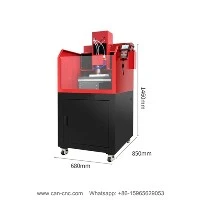
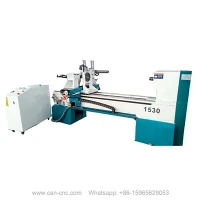
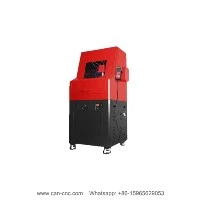
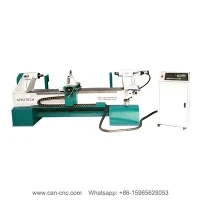
The cutting speed of a wood copy lathe is a crucial factor that significantly impacts the quality of wood turning, the efficiency of the process, and the lifespan of cutting tools. As a reputable supplier of wood copy lathes, I am here to delve into the concept of cutting speed, its importance, and how it relates to our range of products, including the Wooden Turning Lathe For Beginners, Mini Hobby Woodworking Turning Lathe, and Automatic Round Rod Forming Making Machine.
Understanding Cutting Speed
Cutting speed, in the context of a wood copy lathe, refers to the rate at which the cutting tool moves across the surface of the rotating wood workpiece. It is typically measured in surface feet per minute (SFM) or meters per minute (m/min). The cutting speed is determined by the rotational speed of the lathe spindle and the diameter of the workpiece. A higher cutting speed generally results in a smoother finish and faster material removal, but it also places more stress on the cutting tool and can lead to overheating if not properly managed.
Factors Affecting Cutting Speed
Several factors influence the optimal cutting speed for a wood copy lathe. These include the type of wood, the hardness of the wood, the type of cutting tool, and the desired finish.
Type of Wood
Different types of wood have varying densities and grain structures, which affect how they respond to cutting. Softwoods, such as pine and cedar, are generally easier to cut and can tolerate higher cutting speeds. Hardwoods, on the other hand, like oak and maple, are more dense and require lower cutting speeds to prevent chipping and tearing.
Hardness of the Wood
The hardness of the wood is directly related to its density. Harder woods require more force to cut through, and using a high cutting speed can cause the cutting tool to dull quickly or even break. Softer woods, on the other hand, can be cut at higher speeds without causing excessive wear on the tool.
Type of Cutting Tool
The type of cutting tool used also plays a significant role in determining the cutting speed. Carbide-tipped tools are generally more durable and can withstand higher cutting speeds than high-speed steel (HSS) tools. However, the geometry of the cutting tool, such as the rake angle and the clearance angle, also affects its performance at different cutting speeds.
Desired Finish
The desired finish of the wood workpiece is another important factor to consider when determining the cutting speed. A higher cutting speed generally results in a smoother finish, but it may also cause the wood to burn if the heat generated is not properly dissipated. For a rough finish, a lower cutting speed may be sufficient, while a fine finish may require a higher cutting speed and a sharper cutting tool.
Calculating Cutting Speed
The cutting speed can be calculated using the following formula:
[ SFM = \frac{\pi \times D \times RPM}{12} ]
Where:
- SFM is the surface feet per minute
- D is the diameter of the workpiece in inches
- RPM is the rotational speed of the lathe spindle in revolutions per minute
For example, if the diameter of the workpiece is 4 inches and the lathe spindle is rotating at 1000 RPM, the cutting speed would be:
[ SFM = \frac{\pi \times 4 \times 1000}{12} \approx 1047 \text{ SFM} ]
Importance of Cutting Speed
Maintaining the correct cutting speed is essential for several reasons:
Quality of the Finish
A proper cutting speed ensures a smooth and even finish on the wood workpiece. If the cutting speed is too low, the wood may tear or chip, resulting in a rough surface. If the cutting speed is too high, the wood may burn or the cutting tool may become dull quickly, also affecting the quality of the finish.
Efficiency of the Process
Using the correct cutting speed allows for faster material removal, reducing the overall time required to complete a wood turning project. This improves productivity and can increase the profitability of a woodworking business.
Tool Life
A proper cutting speed helps to extend the lifespan of the cutting tool. When the cutting speed is too high, the tool can overheat and wear out quickly. By using the correct cutting speed, the tool can maintain its sharpness for a longer period, reducing the frequency of tool changes and saving on tooling costs.
Cutting Speed Recommendations for Different Woods
As a wood copy lathe supplier, we recommend the following cutting speeds for different types of wood:
| Wood Type | Cutting Speed (SFM) |
|---|---|
| Pine | 800 - 1200 |
| Cedar | 800 - 1200 |
| Oak | 600 - 1000 |
| Maple | 600 - 1000 |
| Mahogany | 600 - 1000 |
These are general guidelines, and the actual cutting speed may need to be adjusted based on the specific characteristics of the wood, the type of cutting tool, and the desired finish.
Our Wood Copy Lathes and Cutting Speed
Our range of wood copy lathes, including the Wooden Turning Lathe For Beginners, Mini Hobby Woodworking Turning Lathe, and Automatic Round Rod Forming Making Machine, are designed to provide precise control over the cutting speed. They are equipped with variable speed drives that allow you to adjust the rotational speed of the spindle according to the requirements of your wood turning project.
The variable speed feature is particularly useful when working with different types of wood or when achieving different finishes. You can start with a lower cutting speed for roughing operations and then increase the speed for finishing operations to achieve a smooth and professional-looking result.
Conclusion
The cutting speed of a wood copy lathe is a critical factor that affects the quality, efficiency, and cost of wood turning. By understanding the factors that influence cutting speed and using the correct cutting speed for your wood turning projects, you can achieve better results and extend the lifespan of your cutting tools.
As a wood copy lathe supplier, we are committed to providing you with high-quality products that offer precise control over the cutting speed. Our range of wood copy lathes, including the Wooden Turning Lathe For Beginners, Mini Hobby Woodworking Turning Lathe, and Automatic Round Rod Forming Making Machine, are designed to meet the needs of both beginners and experienced woodworkers.
If you are interested in learning more about our wood copy lathes or have any questions about cutting speed, please feel free to contact us. We would be happy to assist you in finding the right wood copy lathe for your needs and provide you with the support and guidance you need to achieve the best results in your wood turning projects.


References
- Woodworking Machinery Handbook
- Cutting Tool Engineering Magazine