For whole‑house custom cabinet factories, wooden door manufacturers and panel furniture workshops, clean chip‑free cutting is one of the biggest production pain points. Traditional single‑spindle CNC routers or ordinary panel saws often leave frayed, chipped back surfaces on laminated boards. Operators spend hours manually trimming and sanding every cut piece, raising labor cost, slowing throughput and throwing away plenty of expensive finished boards due to bad edges.
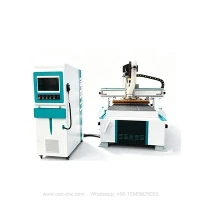
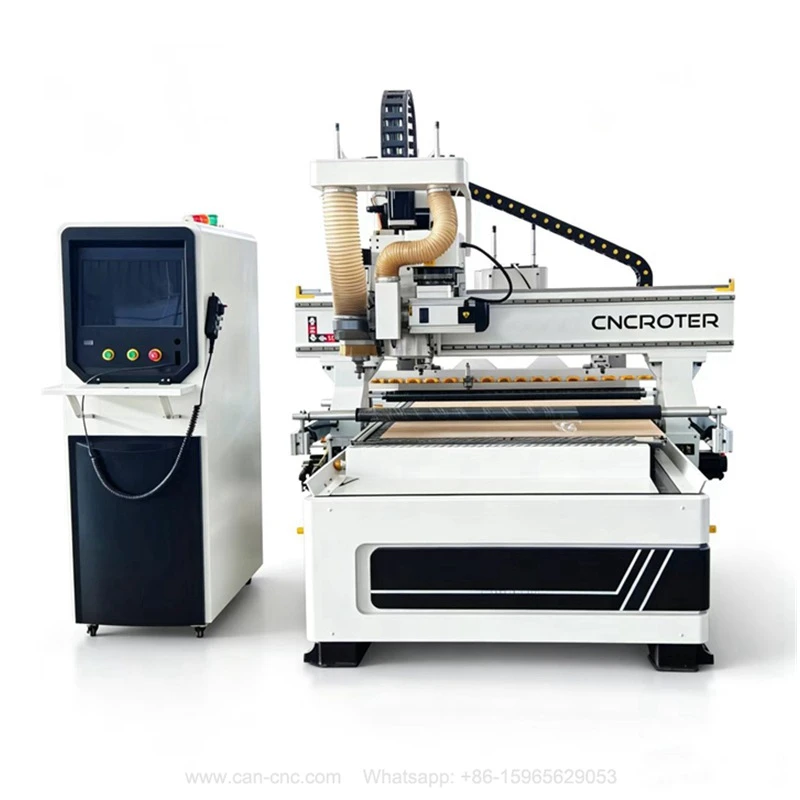
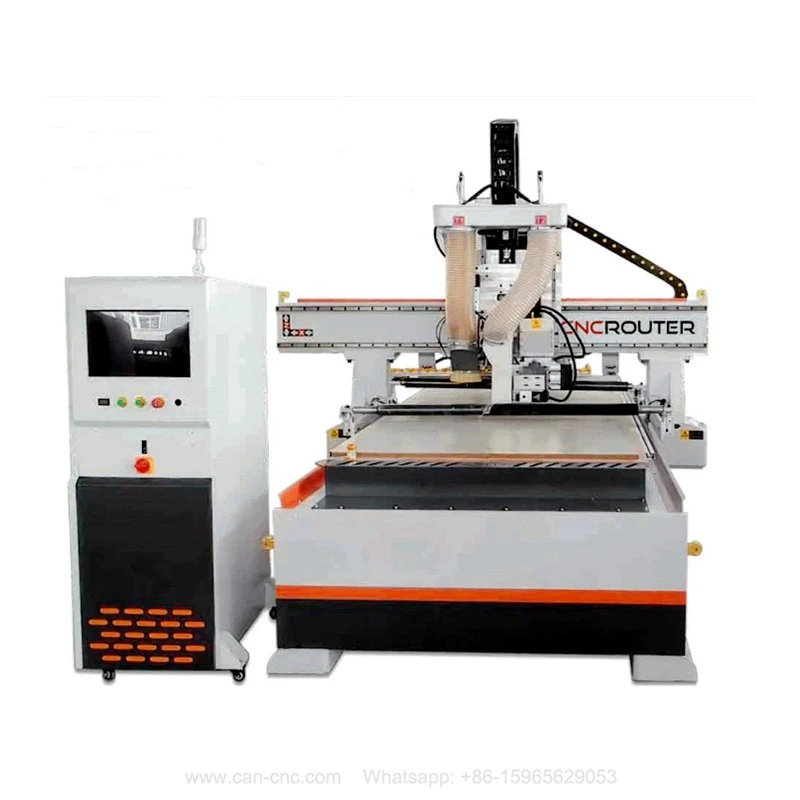
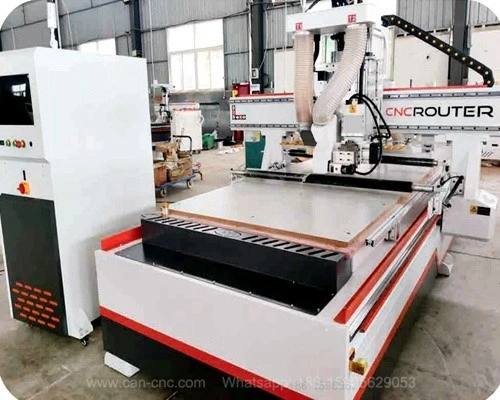
That's where the mother‑child saw blade CNC machining center changes the game. This advanced APEXTECH APCAN 2813 CNC Router With Saw Blades integrates a dual‑saw cutting assembly onto a heavy‑duty automatic‑tool‑change CNC router platform. It has quickly become mainstream industrial equipment for mass‑producing wardrobes, kitchen cabinets, shoe cabinets, wine cabinets, wooden door frames and wall panels across the custom home industry.
Feel free to send us an inquiry now
How Mother‑Child Saw Blades Work: The Core Cutting Principle
The whole cutting logic relies on two counter‑rotating saw blades working in sequence:
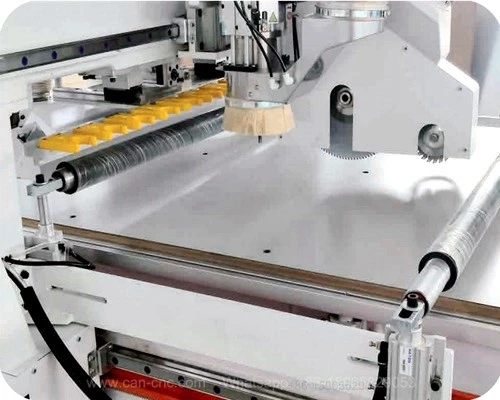
Sub‑saw (small child saw) Mounted forward and slightly below the main saw, the smaller‑diameter sub‑saw spins opposite to the main saw. It pre‑cuts 1‑2 mm deep into the board bottom, slicing through the bottom veneer and wood fibers in advance. This prevents the main saw from tearing and pulling the decorative finish on the reverse side of panels.
Main saw (large mother saw) Following exactly along the pre‑cut kerf left by the sub‑saw, the main saw cuts fully through the entire sheet. Opposite rotation of the two saws counteracts cutting torque, reducing board warping, shifting and lifting during high‑speed cutting. The CNC controller precisely manages blade lifting, lowering and coaxial alignment, minimizing step‑gap defects and reducing manual fine‑tuning work.
Unlike compression router bits, this dedicated dual‑saw setup delivers cleaner cross‑cuts and rip‑cuts for large‑size furniture panels, especially high‑gloss PET, melamine‑coated and veneered boards that are extremely sensitive to chipping.
Feel free to send us an inquiry now
Key Machine Specifications (APCAN 2813 Model)
| Item | Parameters |
|---|---|
| Working travel | 2800×1300 mm (optional:3000×2100 mm,4000×2100 mm) |
| Z‑axis travel | 250 mm (300 mm /400 mm optional) |
| Spindle | 9 kW air‑cooling ATC spindle |
| Tool magazine | Linear‑type automatic tool changer |
| Control system | LNC CNC controller |
| Drive | 1.5 kW servo motor + Japan SHIMPO reducer, rack‑and‑pinion gear drive |
| Re‑positioning accuracy | ±0.03 mm |
| Working speed | 0‑20 m/min; Rapid travel:40 m/min |
| Power requirement | 25 KW total power, 380V 3‑phase power supply |
| Net weight | 2500 KG |
| Supported software | Powermill, UG, Alphacam, Fusion 360, reads G‑Code & M‑Code |
Feel free to send us an inquiry now
Stand‑out Features & Production Benefits
✅ Zero chipping, skip post‑sanding procedures
Most regular single‑saw machines produce chipping on the board's back side. Parts need extra trimming and sanding before edge‑banding. With mother‑child saw technology, panels come off the machine with clean top and bottom edges. You can send pieces straight to edge‑banding, cut down scrap percentage and eliminate secondary hand‑finishing work.
✅ Broad material compatibility
One saw assembly handles particleboard, OSB, eco‑board, veneer plywood, MDF, solid‑wood veneer sheets, acrylic and many decorative laminated panels. Frequent saw‑blade swapping becomes unnecessary for most daily jobs.
✅ High‑precision & stable heavy‑duty build
The machine body adopts quenched heavy‑thick steel pipe structure with finite‑element stress relief treatment. 25/30 linear square guides plus 2+1 beam track design ensure smooth high‑speed running up to 85 m/min without edge jumping. The multi‑zone vacuum adsorption worktable is split into 6 independent adsorption areas with large‑size suction holes, holding small or large sheets firmly and preventing board shifting while cutting.
✅ Real multi‑function CNC platform
Equipped with a linear auto‑tool‑change spindle, this is more than just a panel saw. While saw blades finish straight‑line ripping and cross‑cutting, the spindle performs drilling, hinge‑hole milling, grooving and special‑shape profiling in the same work cycle. One machine completes cutting + hole‑drilling + milling workflows, saving workshop floor space compared with running multiple separate machines.
✅ Intelligent automatic operation
Computer‑aided nesting optimizes sheet layout, lifting board utilization ratio by 5‑10%. Automatic tool‑setting sensor, digital memory‑type centralized lubrication system, flexible drag‑chain cable protection and servo drive system lower operator skill requirements and extend machine service life.
✅ Flexible optional upgrades
You can extend capabilities according to your factory scale:
Automatic labeling unit for component identification
Suction‑cup auto feeding / automatic loading platform for unmanned feeding
Pressure roller device for warped, uneven sheets
Full‑auto cutting output conveyor platform
Secondary dust‑removal assembly for cleaner workshop environment
Feel free to send us an inquiry now
Main Application Scenarios
Whole‑house custom cabinet factories (core market) Cut wardrobe, kitchen cabinet, TV cabinet, tatami and walk‑in‑closet components. Process cabinet doors, drawer panels, partitions. Fit small‑batch custom orders and mass production equally well.
Wooden door & wall‑panel manufacturing Size solid‑composite door frames, interior wooden door blanks, wood‑plastic / carbon‑crystal door panels, long integrated wall panels and grille slats. Prevent veneer peeling on long narrow strips, keep straightness for subsequent wrapping & edge‑banding.
Office furniture & high‑gloss decorative panel processing Thin back‑panel grooving & cutting, PET high‑gloss door substrate cutting, office cabinet component batch production. The dual‑saw design shows big advantages on easily‑damaged thin decorative sheets.
Other sheet‑material processing Decoration workshop on‑site prefabrication, display cabinet & fixture making, wooden packing box cutting, RV interior cabinet panel production and MDF craft substrate cutting.
Note: Not suitable for thick raw logs, nail‑filled old lumber, hardwood thicker than 60 mm. Nails will damage carbide saw tips, while ultra‑thick hardwood creates excessive cutting resistance and risks motor stalling. For such materials, band‑saw equipment is recommended instead.
Feel free to send us an inquiry now
FAQ: Buying & Operating Tips
Q: Mother‑child saw vs ordinary single‑spindle saw, what is the gap? A: Single‑saw / single‑spindle routers often chip the bottom veneer. Mother‑child saw does pre‑cutting on the board underside for blemish‑free double‑sided cutting. Though machine investment is higher, you save heavily on sanding labor and board waste over long‑term production.
Q: Should I choose rotating saw head or non‑rotating model? A: Rotatable mother‑child saw assembly (0°‑90° rotation) is the recommended pick for most custom‑furniture factories, handling both rip‑cut and cross‑cut work with one cutting unit. Non‑rotating type uses two independent fixed saw units for dedicated longitudinal / transverse cutting; it costs more and mainly suits high‑volume door‑frame mass‑production plants.
Q: What configuration fits small workshops producing 20‑30 boards daily? A: The basic rotating mother‑child saw plus linear auto‑tool‑change spindle is cost‑effective. You do not have to add disc tool magazines or full auto loading‑unloading at first to keep capital expenditure reasonable.
Is a Saw‑Blade CNC Router Worth Your Investment?
If your workshop regularly processes melamine, PET‑coated, veneered particle‑board and plywood, and you struggle with chipped edges, heavy post‑processing workload and material loss, a CNC router with mother‑child saw blades delivers tangible ROI.
Instead of buying separate nesting router plus beam panel saw, this all‑in‑one machine merges clean saw cutting, automatic tool‑change milling and drilling. It helps small‑to‑mid‑size furniture factories lift product quality, shorten lead‑time and cut waste, especially amid growing market demand for high‑finish custom cabinetry and wooden door products.
Looking for quotation or more technical details about APCAN 2813 CNC Router With Saw Blades? Feel free to send us an inquiry for machine configuration matching your production needs.
Feel free to send us an inquiry now
Tags: CNC Router With Saw Blades, Mother‑Child Saw CNC Machine, Woodworking CNC, ATC CNC Router, Custom Furniture Production, Panel Nesting Machine