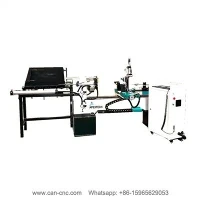
Hey there, fellow hobbyists and DIY enthusiasts! As a supplier of Hobby CNC Routers, I often get asked about the cutting force of these nifty machines. So, let's dive right in and explore what the cutting force of a hobby CNC router really means.
What is Cutting Force?
In simple terms, the cutting force of a CNC router is the amount of force that the router bit exerts on the material being cut. It's like the muscle behind the cutting action. This force is crucial because it determines how well the router can cut through different materials, how fast it can do the job, and the quality of the cut.
Think of it this way: if you're trying to cut through a thick piece of wood with a dull knife, you'll need to apply a lot of force, and the cut might not be very clean. But if you have a sharp knife, you can cut through the wood more easily and get a smoother finish. The same principle applies to a CNC router. A higher cutting force means the router can handle tougher materials and make cleaner, more precise cuts.


Factors Affecting Cutting Force
There are several factors that can affect the cutting force of a hobby CNC router. Let's take a look at some of the most important ones.
Material Type
Different materials have different hardness and density, which means they require different amounts of cutting force. For example, cutting through softwoods like pine or cedar is much easier than cutting through hardwoods like oak or maple. Metals like aluminum or steel are even tougher to cut and require a lot more cutting force.
As a hobbyist, you might be working with a variety of materials, from wood and plastic to foam and acrylic. So, it's important to choose a CNC router that can handle the materials you'll be using. Our 6090 CNC Router Machine is a great option for cutting a wide range of materials, thanks to its powerful spindle and high cutting force.
Router Bit
The type and size of the router bit you use can also have a big impact on the cutting force. A larger bit with more cutting edges will generally require more cutting force than a smaller bit. Additionally, the shape of the bit can affect how it cuts through the material. For example, a straight bit is great for making straight cuts, while a spiral bit is better for making curved cuts.
It's important to choose the right router bit for the job. Using the wrong bit can not only result in a poor-quality cut but also increase the risk of damage to the router and the material. Our 3 Axis Cnc Router 1212 comes with a variety of router bits to choose from, so you can find the perfect one for your project.
Feed Rate
The feed rate is the speed at which the router moves across the material. A higher feed rate means the router is moving faster, which can increase the cutting force. However, if the feed rate is too high, the router might not be able to cut through the material properly, resulting in a rough or uneven cut.
On the other hand, a lower feed rate means the router is moving more slowly, which can reduce the cutting force. This can be useful for making more precise cuts or for cutting through tougher materials. It's important to find the right balance between feed rate and cutting force for your project.
Spindle Speed
The spindle speed is the speed at which the router bit rotates. A higher spindle speed means the bit is rotating faster, which can increase the cutting force. However, if the spindle speed is too high, the bit might overheat or break, resulting in a poor-quality cut.
A lower spindle speed means the bit is rotating more slowly, which can reduce the cutting force. This can be useful for making more delicate cuts or for cutting through softer materials. It's important to choose the right spindle speed for the material and the router bit you're using.
Measuring Cutting Force
Measuring the cutting force of a hobby CNC router can be a bit tricky, as there isn't a standard way to do it. However, there are a few methods you can use to get an idea of the cutting force.
One method is to use a force sensor. A force sensor is a device that can measure the amount of force being applied to an object. You can attach a force sensor to the router bit or the material being cut and measure the cutting force directly.
Another method is to use a power meter. A power meter is a device that can measure the amount of power being consumed by the router. By measuring the power consumption, you can get an idea of the cutting force, as the cutting force is directly related to the power consumption.
Why Cutting Force Matters
The cutting force of a hobby CNC router is important for several reasons. First of all, it determines the types of materials you can cut. If you have a router with a low cutting force, you'll be limited to cutting softer materials like wood and plastic. But if you have a router with a high cutting force, you'll be able to cut through tougher materials like metal and stone.
Secondly, the cutting force affects the quality of the cut. A higher cutting force means the router can make cleaner, more precise cuts, which is important for creating high-quality projects. On the other hand, a lower cutting force can result in a rough or uneven cut, which can make your project look less professional.
Finally, the cutting force can affect the speed of the cutting process. A higher cutting force means the router can cut through the material more quickly, which can save you time and increase your productivity.
Our Hobby CNC Routers
At our company, we offer a range of hobby CNC routers that are designed to provide high cutting force and excellent performance. Our Mini CNC Wood Carving Machine is perfect for beginners and hobbyists who want to start carving wood. It's compact, easy to use, and has a powerful spindle that can handle a variety of wood types.
Our 6090 CNC Router Machine is a more advanced option that can handle a wider range of materials, including wood, plastic, foam, and acrylic. It has a large working area and a high cutting force, making it ideal for larger projects.
And our 3 Axis Cnc Router 1212 is a professional-grade router that can handle even the toughest materials, such as metal and stone. It has a high-precision spindle and a powerful motor, ensuring accurate and efficient cutting.
Contact Us for Purchasing
If you're interested in purchasing a hobby CNC router, we'd love to hear from you. Whether you're a beginner or an experienced hobbyist, we can help you find the right router for your needs. Just reach out to us, and our team of experts will be happy to assist you with any questions you might have and guide you through the purchasing process.
References
- Smith, J. (2020). CNC Router Basics. Woodworking Magazine.
- Johnson, A. (2019). Understanding Cutting Forces in CNC Machining. Manufacturing Technology Journal.
- Brown, C. (2018). Choosing the Right Router Bit for Your CNC Router. DIY Enthusiast Blog.